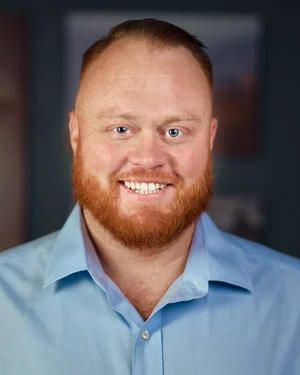
I finished Donnie Griggs' Becoming Good Men: A Guide to Figuring It Out Together this morning. It wasn’t really the first book I planned on finishing in 2026 but thankfully it was.
Much of what I read has been on my mind all day. I just put my son to bed (if he doesn’t get up for the 8th time) and I’m sitting here at my computer tonight after a good day with my wife and son. I’ve been thinking about the men in my life, and you, the men in our online program, seeking to follow Jesus in the middle of work, school, ministry, and family life. I wanted to share a few reflections that have kept coming back to mind throughout the day.
So I’m doing something I’ve never done before...this email is going to a segment, just the men.
It won’t be the same content you read every Monday. If it encourages you, I’m grateful. If it doesn’t, no worries at all. Check back in on Monday and archive this one.
This morning I was on the couch in our living room, with some coffee my brother sent me after a recent trip to Norway, finishing the last chapters of the book. My son Jaxon was laying next to me reading his own book, quiet and content in that way kids can (sometimes!) be when the day is still fresh. He’s seven. Every now and then he shifted closer, and I caught myself looking down at him and then back at my Kindle, feeling the weight of the ideas in the book that don’t let you stay neutral.
What kind of man is he learning to become by watching me?
We all know we’re living in a time where men in the public space, including men in the church, are falling. We also see stats and stories about men checking out, avoiding responsibility, and drifting. For some, it’s an unexpected fall from a man we respected. For others, it’s slower. It’s compromise that gets normalized, isolation that feels safer than being known, and a life that looks fine on the outside while the inside is rotting. I also know the public sphere isn’t the whole story.
I’m also encouraged because I see faithfulness up close. I see younger men stepping into leadership earlier than they expected, taking their local church seriously, trying to build a life with substance. I also see older men quietly staying steady, loving their wives, showing up for their kids, serving without needing attention. But I also know this kind of faithfulness does not happen on autopilot. It has to be fought for. It has to be chosen.
Griggs says, “Finishing well is not something that will happen by default or by accident.” That’s true, and it’s humbling to me. There was another line that made me pause and reflect: “Boats that lose propulsion don’t normally drift to a good place.” That feels like the spiritual version of reality. Drift doesn’t take you toward Christ but takes you wherever your appetites, distractions, and excuses want to go.
So as I start 2026, here are three challenges I’m taking personally and I want to consider them as well.
First, lead yourself before you try to lead anyone else.
Griggs writes, “You are the first person you lead.” It’s simple, and that’s why it exposes you. If you can’t lead yourself, you won’t lead your family well. You won’t lead your church well. You may influence people for a while, but you won’t sustain healthy leadership.
For me, that means I can’t treat Scripture and prayer like background noise like I do often do, especially being in a context working at a seminary where the day-to-day is filled with Bible, God, theology, and ministry language. But I have to treat scripture and prayer not merely as the scenery around me but like the oxygen that is needed to sustain me.
Griggs talks about “taking responsibility for your heart” by “ordering your affections,” and taking your heart first to God. He says that until your heart is looking to God for its satisfaction, it will be restless, and that restlessness will come out destructively. That is not merely a theory.
Restlessness becomes shortcuts.
Restlessness becomes escapism.
Restlessness becomes compromise you try to keep hidden.
If 2026 is going to be different, it won’t start with big ambition. It will start with daily habits, no not habits, that puts it in the productivity sphere, but daily practices such as reading God’s Word, prayer, and confession of sin. A life that is actually being actively shaped and not just merely talked about.
Second, find one man to mentor this year, and do not overcomplicate it.
A lot of guys, including myself, hear “mentorship” and immediately think that I’m not old enough, I’m not wise enough, I don’t have enough experience, I’m not qualified. I get that. But Griggs includes this template: “A good man blesses and encourages. A good man walks with other good men.” That is mentorship at its most basic. It’s not a program but your presence. It’s a willingness to be consistent and to show up.
And it’s not only about you being the mentor. It’s also about you refusing isolation. The New Testament calls the church “brothers” for a reason. We were made for friendship, and we need each other. Griggs cites Proverbs 18:24, “There is a friend who sticks closer than a brother.” He also warns against settling for shallow companionship that keeps you in the shallow end of the pool.
So here’s a challenge for you and me in 2026: pick one man and take the first step.
Invite him to coffee once a month. Read a short passage of Scripture together. Pray. Ask real questions. Griggs lists questions that go deeper than “How’s it going?” and I think they’re worth stealing such as asking…
What’s going right?
What’s broken?
What’s missing?
Where are you stuck?
Those questions move you out of small talk and into the places we tend to avoid.
If you’re thinking, I’m not qualified to mentor anyone, you may be exactly the kind of man who should. You don’t need to have arrived. You need to be walking with Jesus and willing to walk with someone else.
Third, write your finish line, then live on purpose toward it.
Griggs asks, “What kind of man do you want to be?” He’s not asking about your desired job title or your future platform. He’s asking about who you are becoming.
He also tells you to think about what people might say when you die. It can feel heavy and honestly a bit scary but it clarifies. It forces you to name the difference between a life that looked impressive and a life that was faithful.
And if you don’t name your finish line then you drift into whatever is loudest such as the infinite scroll on your phone, the lust that slowly erodes your soul, the easy dopamine that distracts you from the good and beautiful, the comfort of never being fully responsible.
So put words on paper.
In 2026, what kind of man do you want your kids to remember? What words do you want your wife to say about the man inside the home? What kind of man do you want your friends to describe? What kind of man do you want your church to be able to trust?
Then don’t merely sit there admire that picture in your head. Walk toward it intentionally.
Griggs is right…finishing well does not happen by accident.
That’s my New Year’s reflection, unplanned, but honestly needed. I think we need more than vague motivation right now. We need men who are rooted in Christ, who stay connected to other brothers, and who refuse to drift.
If you want a simple place to start tonight: lead yourself in the Word and prayer, choose one man to invest in this year, and write one sentence that defines the man you want to be by the end of 2026.
Brothers, we’re in this together. We need each other. Our families, our churches, and the men God has placed around us need faithful men who are rooted in Christ, taking up their cross daily, and walking in steady obedience. That won’t happen by accident. It will happen when we decide, by God’s grace, to live with intention.
“Be watchful, stand firm in the faith, act like men, be strong. Let all that you do be done in love.”
1 Corinthians 16:13–4